By Mike Rux · Published August 6, 2024 · Updated July 31, 2026
TL;DR
- An online marketing plan is a written document covering seven things: goals, audience, competitors, channels, budget, content, and measurement.
- Pick one primary goal and one primary metric before you pick any channel. 74.9% of SEO teams make organic traffic a top measurement priority, and 60.4% prioritize qualified leads and sales conversions (SEJ, State of SEO 2026).
- Plan for AI on both sides: your customers now search with it, and your team can save real time with it, 76.8% of marketing decision-makers say time savings is AI’s biggest win (SEJ, State of AI in Marketing).
- Budget for consistency over intensity. A modest plan you execute for 12 months beats an ambitious one you abandon in 6 weeks.
- Review the plan quarterly. Channels shift; goals shouldn’t.
Creating a digital marketing plan can feel daunting. There are a lot of moving parts, and it’s easy to feel like you’re forgetting something important. The fix isn’t more effort, it’s a structure. After 15+ years of building plans for small businesses around Gilbert and the East Valley, we’ve boiled ours down to seven steps you can work through in an afternoon.
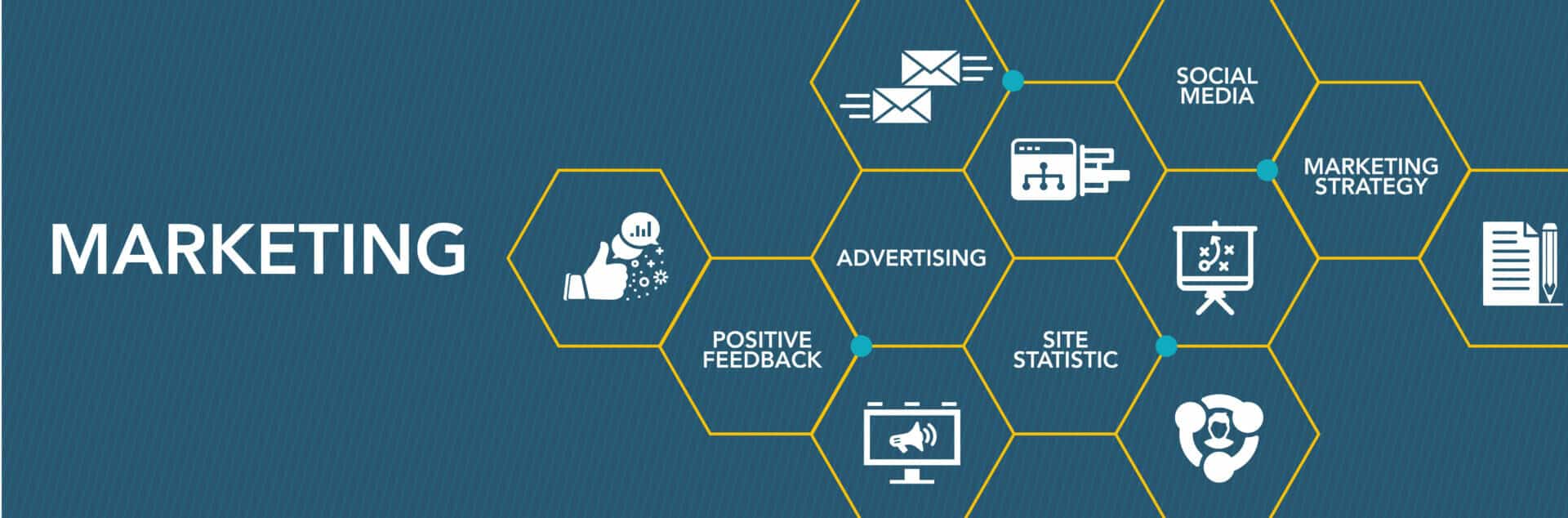
How Do I Create a Marketing Plan?
You create a marketing plan by working through seven steps in order: define one primary goal, profile your audience, study your competitors, choose your channels, set a budget, build a content strategy, and decide how you’ll measure results. Write each step down, a plan that lives in your head isn’t a plan, it’s a mood.
Here’s each step, with the questions we ask clients at that stage.
Step 1: Define Your Goals
Start with one primary goal and one number attached to it. “More web traffic” isn’t a goal; “20 qualified leads per month from organic search by Q2” is. Without a specific target, you can’t measure progress or ROI, you’ll just accumulate activity.
The industry has settled on what’s worth measuring: 74.9% of SEO teams make organic traffic a top priority for measuring impact, and 60.4% prioritize qualified leads and sales conversions (Search Engine Journal, State of SEO 2026 survey of 371 professionals). For most service businesses, leads are the honest goal, traffic is just the pipe they arrive through. If you’re new to that distinction, read what is lead generation first.
Step 2: Know Your Audience
You can’t write a plan for a customer you haven’t defined. Who are they? What problem sends them to Google, or, increasingly, to ChatGPT? What words do they actually type?
Build one or two simple buyer personas: the emergency caller (needs you now, searches “near me,” converts by phone) and the researcher (compares options for weeks, reads reviews, downloads guides). Each persona needs different content and different channels. And note the shift underway: 77% of ChatGPT users in the USA treat it like a search engine (Semrush, citing Adobe), so “where does my customer search” now has more than one answer.
Step 3: Understand the Competition
Your plan should be built against real competitors, not imagined ones. Search your main service the way a customer would and note who actually appears, in the map pack, the organic results, and the AI Overview. Those are your competitors online, whoever you think of as competitors offline.
Look at what they do well and where they’re thin. Tools like Semrush will show you exactly which keywords they rank for and where the gaps are, this is the same competitor research we run as a Semrush Agency Partner, and it regularly reshapes a client’s entire plan. Common finding: the “biggest” competitor is invisible online, and a smaller rival is quietly winning every search that matters.
Step 4: Choose the Right Channels
Channels come fourth, not first, they should be dictated by your goal, audience, and budget. Most small business plans over-invest in channels that feel good and under-invest in the ones that convert.
| Channel | Best for | Time to results |
|---|---|---|
| SEO / Local SEO | Durable lead flow, map-pack visibility | Months, then compounding |
| Google Ads | Immediate leads while SEO builds | Days |
| Content marketing | Authority, AI-answer citations | Months |
| Social media | Brand familiarity, proof | Ongoing |
| Repeat business, referrals | Weeks |
One data point worth weighing when you allocate: SEO drives over 1,000% more traffic than organic social media (Ahrefs, citing BrightEdge). Social has real jobs, trust, recruiting, staying visible, but for most service businesses it shouldn’t be the lead engine.
Step 5: Set a Budget
Set a budget you can sustain for at least 12 months, because digital marketing compounds, and quitting early forfeits the compounding. Weigh three factors: your goal, your channel mix, and what you can genuinely afford without flinching in month four.
For context on the SEO line item: $501–$1,000 per month is the most common SEO retainer rate industry-wide, charged by 20.4% of providers, and SEOs serving local markets average $1,557 per month (Ahrefs SEO pricing survey). Budgets are also holding steady despite the AI noise, 65% of organizations expect no reduction in SEO investment over the next 12 months (SEJ, State of SEO 2026). If you want a number tailored to your situation, our SEO cost calculator will build one in about two minutes.
Step 6: Create a Content Strategy
Your content strategy answers three questions: what will you publish, for whom, and how will you know it worked. Tie every planned piece to a persona from Step 2 and a goal from Step 1, content without a job assignment becomes a blog nobody reads.
In 2026, one more requirement: make your content quotable. AI Overviews and chatbots lift clear, direct answers from pages with real authorship and sources. The winning approach is human-led and AI-assisted, 58.5% of SEO professionals plan to focus on human-authored content supported by AI tools, versus only 22.4% pursuing primarily AI-generated content (SEJ, State of SEO 2026). Use AI to draft and research; use humans to add the experience only you have.
Step 7: Analyze and Optimize
A plan isn’t finished at launch, it’s finished never. Set up GA4 and Google Search Console on day one, define what counts as a conversion (calls, forms, texts, bookings), and review monthly. Look at what’s producing leads, not just traffic, and reallocate quarterly.
Fair warning from the industry: 28.6% of SEO professionals struggle with measuring ROI and attribution (SEJ, State of SEO 2026). Small businesses have an advantage here, you can simply ask every new customer, “How did you find us?” Write the answers down. It’s the cheapest attribution tool ever built.
What Should a Digital Marketing Plan Include?
A digital marketing plan should include seven components: a specific goal with a number, defined audience personas, a competitor summary, a prioritized channel list, a 12-month budget, a content calendar, and a measurement setup (GA4, Search Console, call tracking). One to three pages is plenty, the discipline is in writing it down and reviewing it quarterly.
Want a Second Set of Eyes on Your Plan?
We build these plans for a living. If you’d like help pressure-testing yours, or you’d rather skip to a plan built from real competitor data, our digital consultancy service starts exactly there, with no smoke and mirrors, just a roadmap and reporting you can read. Reach out for a free consultation, or browse more planning guides on The Digital Climb.
Sources
- Search Engine Journal, State of SEO 2026 survey (n=371, 52 countries), searchenginejournal.com (measurement priorities, human-vs-AI content plans, ROI struggles, investment outlook)
- Search Engine Journal, State of AI in Marketing survey (n=155 US decision-makers, May 2025), searchenginejournal.com (AI time savings)
- Semrush, “AEO vs SEO: Core Differences,” citing Adobe, https://www.semrush.com/blog/aeo-vs-seo/ (ChatGPT used as a search engine)
- Ahrefs, “107 SEO Statistics for 2026”, https://ahrefs.com/blog/seo-statistics/ (SEO vs organic social traffic, SEO pricing survey)