By Mike Rux · Published August 6, 2024 · Updated July 31, 2026
TL;DR
- WordPress SEO breaks into three workstreams: technical SEO (speed, crawlability), content SEO (original, useful pages), and off-site SEO (links and mentions).
- The bar is low and the prize is big: 96.55% of all pages get zero organic search traffic from Google (Ahrefs, 2026).
- Original content is the highest-impact activity, 66.3% of SEO professionals ranked it first over the past 12 months (SEJ, State of SEO 2026).
- Internal linking is the cheapest win on WordPress: pages with at least one exact-match internal anchor had at least five times more traffic (Zyppy, via Ahrefs).
- In 2026, structure your posts so AI Overviews and chatbots can quote them, clear answers, real sources, real authorship.
If you run your business on WordPress, you’re in good company, and good shape. WordPress remains one of the most popular content management systems in the world, and it gives you direct control over almost everything Google cares about. The catch: most site owners never use that control. Ahrefs’ 2026 data shows 96.55% of all pages get zero organic search traffic from Google. Zero.
This guide is the same three-part framework we run on client sites at our SEO service: technical SEO first, then content, then off-site authority. Updated for 2026, because the destination has changed, you’re no longer just optimizing for ten blue links, you’re optimizing to be the source that Google’s AI Overviews and chatbots cite.
How Do I Increase WordPress Website Traffic?
You increase WordPress website traffic by fixing technical SEO (site speed, indexing, Core Web Vitals), publishing original content that matches what your customers search, and earning links and mentions that build authority. Work in that order, fast site, useful pages, then promotion, and measure everything in Google Search Console and GA4.
Here’s each layer in detail.
Technical SEO: Make WordPress Fast and Crawlable
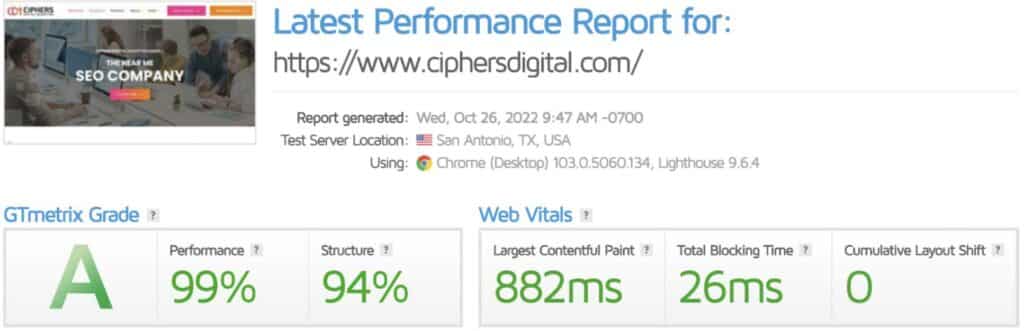
Page speed is still the highest-leverage technical fix on WordPress. It improves rankings, user experience, and conversions at the same time, and most sites fail here. Ahrefs found 72.3% of websites have slow pages and only 33% pass the Core Web Vitals threshold. On WordPress specifically, the usual culprits are bloated themes, oversized images, and plugin sprawl.
The practitioner checklist we actually use:
- Caching and performance plugin. We run WP Rocket on our own site; configure page caching, delay non-critical JavaScript, and preload critical assets.
- Image discipline. Compress and serve modern formats; set width/height attributes so layouts don’t jump, that’s the cumulative layout shift metric Google scores you on.
- Lean plugin stack. Every plugin is code someone else wrote running on your server. Audit quarterly; delete what you don’t use.
- Google Search Console. Verify your site, submit your XML sitemap (Yoast generates one automatically), and use the URL Inspection tool to request indexing after big updates. Search Console is also where Core Web Vitals problems get reported, for free.
- SEO plugin basics. Yoast or similar for titles, metas, and schema. Don’t fight the defaults until you know why.
Technical work pays. In the State of SEO 2026 survey (Search Engine Journal, 371 professionals across 52 countries), 42.3% said technical SEO enhancements delivered their greatest positive impact of the year.
Content SEO: Publish Pages Worth Ranking
WordPress is a content management system, its superpower is publishing, and publishing original, useful content is the single highest-impact SEO activity you control. In the same State of SEO 2026 survey, 66.3% of SEO professionals said original content creation had the greatest positive impact on their results, and 42.6% cited content updates, refreshing what you already have, as a top-impact activity too.
The rules that matter on WordPress:
- Original beats duplicated, every time. Copied or templated content trains Google to ignore your site. This especially applies to service-area pages: each city page needs genuinely different, locally useful content, not the same paragraph with the town name swapped. (We wrote a whole system for this, the hub, wheel and spoke local SEO strategy.)
- Answer questions directly. Semrush’s research shows over 88% of searches that trigger Google AI Overviews are informational. Posts that open with a clear, quotable answer are the ones AI systems lift, and 80% of users still click through to traditional results to verify what AI tells them (Kevin Indig study, via Search Engine Journal), so being the verifiable source wins twice.
- Show your author. Real bylines, real experience, real sources. 49.6% of SEO professionals plan to invest in E-E-A-T reinforcement this year (SEJ, State of SEO 2026) because Google and AI engines both reward provable expertise.
- Update old posts. A dated post that once ranked is an asset waiting to be reclaimed, exactly what we did with this one.
Off-Site SEO: Links, Mentions, and Authority
Off-site SEO means earning links and brand mentions from other reputable sites, which tells Google, and AI answer engines, that your site is trusted. Think of links as votes. Ahrefs’ research confirms a positive correlation between the number of websites linking to a page and its search traffic, and top-ranking pages keep earning new followed referring domains at 5%–14.5% per month.
For a small business on WordPress, that looks like:
- Local sponsorships, chamber memberships, and supplier pages that link to you.
- Genuinely useful content other sites want to reference (tools, data, guides).
- Social media as the amplifier, not the ranking factor itself, but the way link-worthy content gets seen.
There’s also a 2026 bonus: authority now feeds AI visibility. Semrush’s AI Mode research found AI consistently prioritizes domains with strong backlinks, authority, and visibility, even when it cites different pages than Google’s top results. Our full link building guide covers what’s safe and what’s snake oil.
One More WordPress-Specific Win: Internal Links
Internal linking deserves its own heading because on WordPress it’s free, fast, and measurable. Zyppy’s internal links study (cited by Ahrefs) found pages with at least one exact-match internal anchor had at least five times more traffic than pages without, and 22.9% of SEO professionals rank internal linking among their highest-impact activities (SEJ, State of SEO 2026). Every time you publish a post, link it to your related service page and one or two older posts, descriptive anchors, not “click here.”
Does WordPress Help SEO?
Yes, WordPress helps SEO by giving you full control over titles, URLs, schema, speed, and publishing, plus a mature plugin ecosystem (Yoast, WP Rocket) that handles the mechanics. But WordPress is a toolbox, not a ranking guarantee: an unmaintained WordPress site with a bloated theme will still underperform a fast, well-structured one.
White Hat Only, and What to Do Next
Everything above is white hat: real speed, real content, real authority. Shortcuts (spun content, purchased link packages, doorway pages) tend to work right up until they very much don’t.
Start with one item from each layer this week: run a speed test, refresh your best old post, and ask one local partner for a link. Then measure in Search Console. For more practitioner guides like this one, browse The Digital Climb. And if you’d rather have a team that does this daily handle it, including the WordPress development side, get in touch with Ciphers Digital Marketing. Call or text (602) 844-8072.
Sources
- Ahrefs, “107 SEO Statistics for 2026”, https://ahrefs.com/blog/seo-statistics/ (zero-traffic pages, slow pages, Core Web Vitals, backlink correlation, Zyppy internal links data)
- Search Engine Journal, State of SEO 2026 survey (n=371, 52 countries), searchenginejournal.com (original content, content updates, technical SEO, internal linking, E-E-A-T investment)
- Semrush, “26 AI SEO Statistics for 2026”, https://www.semrush.com/blog/ai-seo-statistics/ (AI Overviews informational-intent share)
- Kevin Indig study, cited in Search Engine Journal’s “SEO Trends 2026”, searchenginejournal.com (80% click-through-to-verify)
- Semrush, “AEO vs SEO: Core Differences”, https://www.semrush.com/blog/aeo-vs-seo/ (authority drives AI citation)